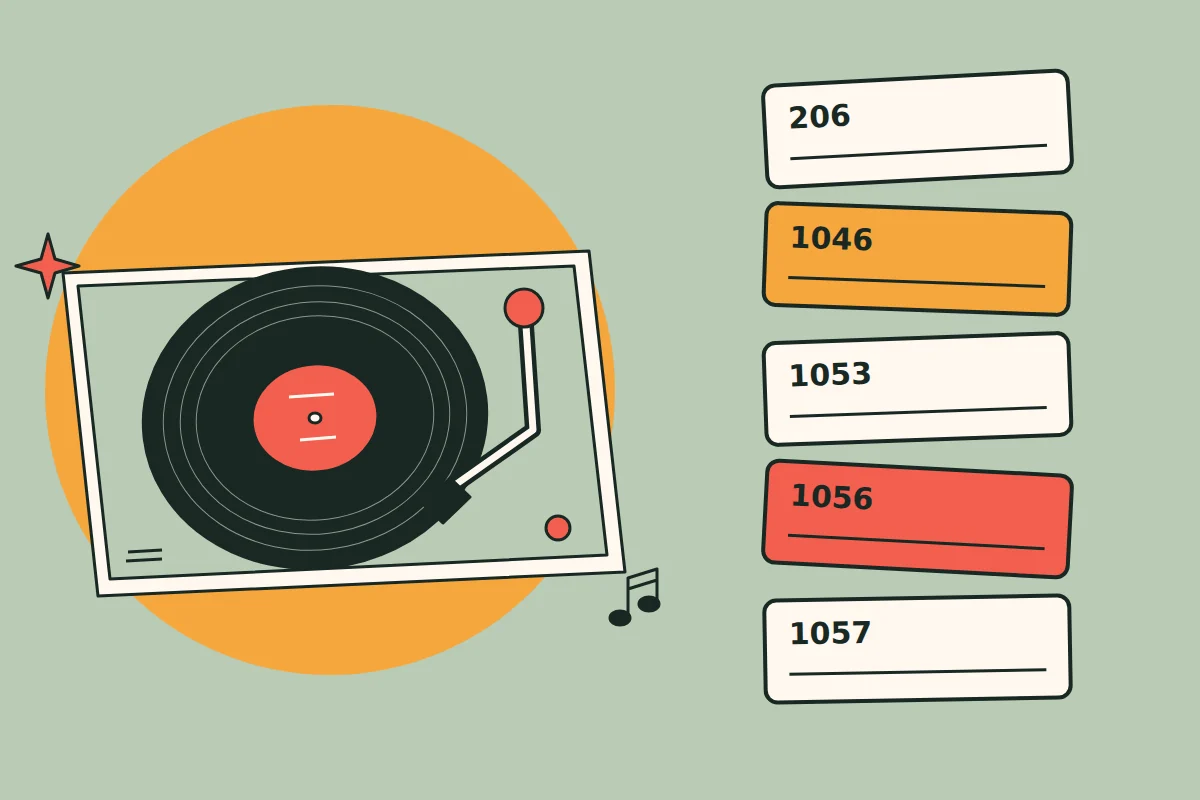
Five surviving Phoncert cards carry the name Pigeons Playing Ping Pong. One points to Asheville Music Hall in 2014; four display dates in 2015 and name Buffalo Iron Works or Tralf Music Hall. Together they restore a useful trail through the old catalogue, but five cards do not necessarily establish five separately verified performances.
This is a reference for readers following a former listening link. The numbers below identify the original pages; their audio has not been recovered here. Dates and times are transcribed as the cards display them, without converting an unspecified time zone into a local concert date.
206: the Asheville card
The page for show 206 names Asheville Music Hall and displays 24 October 2014 at 9:00PM. Its preserved capture is dated 22 October, two days before that displayed date. It therefore documents an advance listing, rather than a review written after the performance.
This card supplies more musician detail than the later four: Greg Ormont on vocals and guitar, Jeremy Schon on guitar and vocals, Ben Carrey on bass and vocals, and Dan Schwartz on drums and vocals. Those are the names in this historical biography, not a statement about the band’s current membership or proof of who took the stage that night.
The biography introduces a Baltimore group through funk, rock, electronic influences and improvisation. That tells us how the act was presented to a prospective listener. It supplies no track list or description of a particular solo, so there is no basis here for reconstructing the sound of the missing performance.
The four later cards
All four repeat a shorter promotional biography. Their identifying differences are in the venue and date fields:
- 1046: Buffalo Iron Works; 2 October 2015, 1:00AM. Read the preserved card.
- 1053: Buffalo Iron Works; 23 October 2015, 1:05AM. Read the preserved card.
- 1056: Tralf Music Hall; 19 November 2015, 2:00AM. Read the preserved card.
- 1057: Buffalo Iron Works; 5 December 2015, 3:30AM. Read the preserved card.
These snapshots were captured in September 2016. That is when the archive preserved the pages, not a verified concert date. Read the date inside the card separately from the date in the archive’s address: otherwise a 2015 listing can be mistaken for a 2016 event.
Which details distinguish a recording?
The repeated biography is weak identification evidence: it describes the act across multiple pages. The venue is more selective, although Buffalo Iron Works still occurs three times. A stronger reference keeps the number, displayed date and venue together. For example, “1046 — Buffalo Iron Works — displayed 2 October 2015” preserves a distinction that “Pigeons at Buffalo” loses.
The after-midnight times create a separate question. A local announcement might refer to the preceding evening, but these recovered cards do not establish the conversion. Moving every date back by one day would replace an uncertainty with an unsupported correction. Keep the displayed value until a dated promoter, venue or artist source identifies the same event.
Nor should numerical order stand in for chronology or a set number. An identifier locates a record in the former system; it does not explain how that system created or revised records. The Jen Hartswick Superjam cards provide a useful comparison: several identifiers carry the same event description with different times.
For the other surviving listening links, continue to the Phoncert concert archive. This page’s contribution is the five-card comparison, including the limits of what each card can tell a listener searching for a specific show.