Skydyed appears in two Denver listings in Feyline’s past artist events archive. One says exactly what the band was booked to do. The other gives three names on a bill. If you are reconstructing an opening slot from an old link, the difference is worth keeping.
The Bluebird announcement names the role
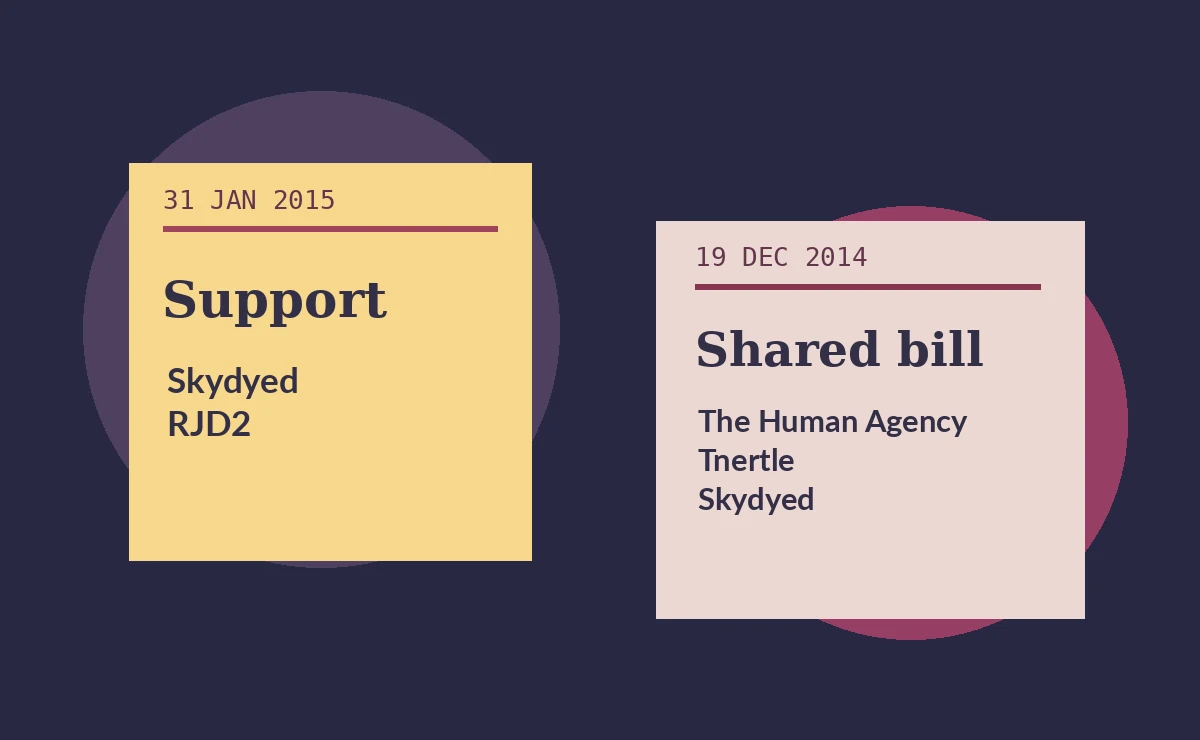
Under 31 January 2015, Feyline’s Bluebird entry says that Skydyed would open for RJD2. The listing identifies Denver and gives 8 p.m. as the advertised door time. An archive note can therefore record that Skydyed was billed as the opener for RJD2 at the Bluebird in Denver, with Feyline as the source. The date identifies the event. The wording gives us a role, while the door time describes when the venue planned to admit the audience.
For a note about what actually happened onstage, look for a record of the show itself. A review describing the opening set, a dated recording published with a clear credit, or a later account from the venue could add that evidence. Until then, “billed to open” keeps the announcement’s meaning intact.
The Colfax entry supports a different claim
Feyline’s 19 December 2014 entry at The 1UP on Colfax names The Human Agency, Tnertle and Skydyed. The prose announces a shared night, and the heading highlights Skydyed because the page follows Feyline’s artists. The order in that sentence carries little weight as running-order evidence. Phoncert’s Colfax guide can help place the venue and find other surviving cards, while Feyline supplies the wording for this particular bill.
If both entries were going into the same database, give them the same artist identity and separate role notes. Write “billed to open for RJD2” beside the Bluebird date and “listed with The Human Agency and Tnertle” beside the Colfax date. Retain the event dates and publisher in each row. A later timetable can then fill the Colfax gap without rewriting what the earlier announcement actually said.